Dynamics and Articulation: Change Loudness and Connection Separately
A note can be quiet and detached or loud and connected. Separate loudness from duration and connection so that one instruction does not accidentally change every part of your playing.
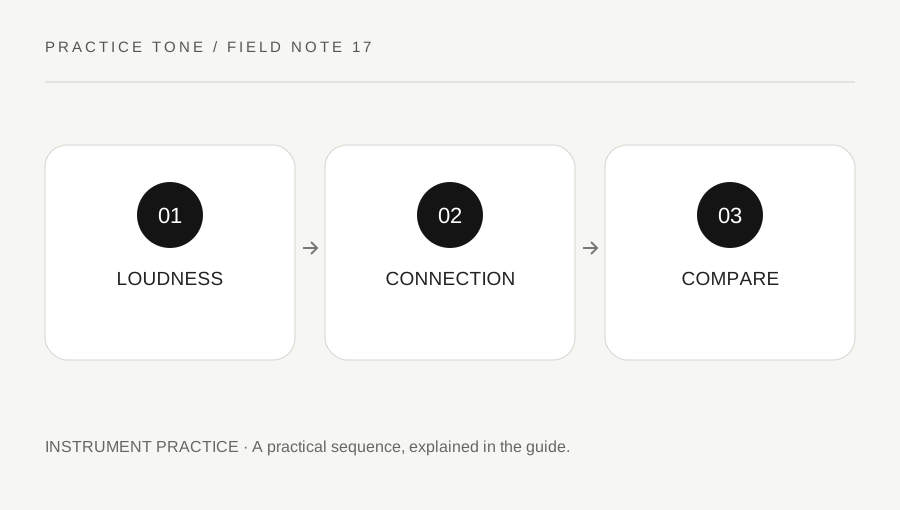
Original explanatory diagram. Numerical examples in this guide illustrate the reasoning; they are not a claim of hands-on testing.
Name the two practice variables
Dynamics concern relative loudness. Articulation concerns how notes begin, continue and connect or separate. In a basic exercise, legato suggests connected notes and staccato suggests detached notes, while exact execution depends on the instrument and musical context.
A loud note is not automatically short, and a quiet note is not automatically connected. Write two independent instructions, such as quiet plus detached, to prevent them from collapsing into one habit. Keep pitch sequence and tempo unchanged during the first comparisons.
Choose a comfortable volume rather than a maximum. This is a control exercise, not a test of force. If louder playing creates tension or a harsh sound you cannot manage, reduce the dynamic range and focus on a clear relative difference that remains comfortable.
Practice one pitch at two dynamic levels
Play four even notes on one pitch at a quiet level, then four at a moderately stronger level. Keep their spacing and intended length alike. Listen for whether the change in loudness also caused rushing, extra tension or a different release.
On piano, key attack influences loudness, while the instrument's mechanism and resonance affect the result. On guitar, picking or plucking action influences attack and volume. Use appropriate technique for your instrument rather than a generic instruction to press harder.
The browser volume slider changes playback level, but it does not teach your instrument's dynamic technique. Use it for comfortable listening and use the physical instrument to practice controlled changes. The explorer's synthesized sound is a reference, not a model of every piano or guitar response.
Change connection without changing the pulse
Play four connected notes, then four clearly detached notes at the same tempo and approximate loudness. For detached notes, create a deliberate shorter sounding duration while allowing the remaining time before the next beat. Do not move the next attack earlier merely because the previous note ended sooner.
For connected playing, avoid an unintended gap, but do not assume that every instrument achieves connection through identical hand motion. On guitar, ringing strings and muting require attention. On piano, finger release and pedal use can change the connection; begin without adding pedal if it obscures the exercise.
If a technique produces discomfort, stop and seek appropriate instruction. A label such as legato describes a musical result and does not justify a strained movement or a one-size-fits-all fingering.
Combine the variables in a small matrix
Try four versions of the same original sequence C–D–E–C: quiet connected, quiet detached, stronger connected and stronger detached. Use one note per beat and keep the same register. Record which combination accidentally changed the tempo or produced unwanted overlap.
This comparison makes the variables visible. If quiet detached notes become late, isolate the release and next attack. If stronger connected notes blur together, inspect note duration rather than reducing everything to a volume problem.
Finish by choosing one manageable contrast to repeat in the next session. A clear musical intention is more useful than demanding maximum difference immediately. As control improves, you can apply the same separation to a longer phrase, shaping loudness and connection deliberately instead of allowing one instruction to determine every aspect of the sound.
A written review table can use rows for quiet and stronger playing, with columns for connected and detached notes. Put one observation in each cell: attack clarity, gap size or unintended tension. This makes all four combinations visible and prevents the easiest version from being repeated while the difficult combination remains unexamined. Choose one cell for the next session rather than adding more pitches immediately.
A practical checklist
Tick items for your own use. This checklist is saved only in this browser.
Questions that come up
Does staccato mean louder?
No. It concerns detachment or note length in context. A detached note can be quiet or loud.
Does legato mean using the sustain pedal?
Not automatically. Connection can involve different techniques, and pedal may blur a beginner exercise. Use an instrument-specific approach.
Can the volume slider grade my dynamics?
No. It controls synthesized playback level and does not listen to or assess your instrument.
References & scope
Background references checked on 18 October 2026. The examples and practice exercises are original editorial explanations, not copied procedures or professional advice.