Record a Short Practice Attempt and Review One Question
A short recording can reveal timing and clarity that are hard to notice while playing. Define the question first, then compare like attempts without turning every take into a performance judgment.
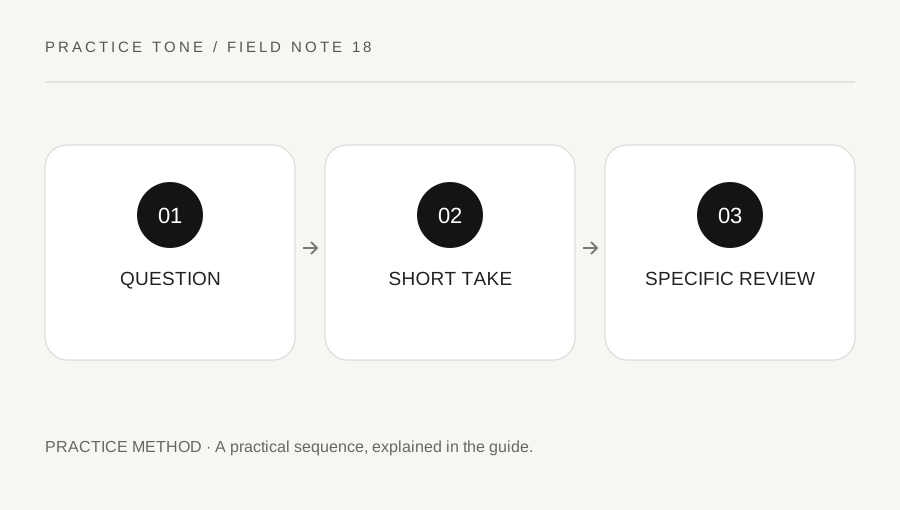
Original explanatory diagram. Numerical examples in this guide illustrate the reasoning; they are not a claim of hands-on testing.
Choose the review question before recording
Select one observable feature: whether a chord change arrives on the bar line, whether eighth notes stay even, or whether a final note is released deliberately. A question such as “Was it good?” is too broad to guide a useful correction.
Choose a short original exercise or material you have the right to use. Ten to thirty seconds can be enough to hear a targeted issue. The duration is a practical suggestion, not a requirement. Avoid recording other people's conversations or private activity in the background.
This website does not record audio. Use a recording tool you control, understand where it stores files and check whether it uploads them. Keep the browser metronome's active-page behavior in mind: it stops when hidden, so switching to another tab may end its click during a recording attempt.
Keep the setup consistent enough to compare
Place the recorder in a stable position and use comfortable sound levels. A device too close to a loud source may distort, while a distant position may emphasize room sound. You do not need a studio setup for a basic timing review, but a changed position can affect how clarity and loudness appear.
Record a brief count-in or state the tempo and task. This lets you interpret the take later. If a metronome is audible, distinguish its click from your instrument attack when listening. Device latency and room reflections can complicate precise timing claims, so use the recording as a practical learning aid rather than calibrated measurement.
Keep the take short enough that you can listen attentively. A long file with an uncertain starting point often creates more review work without answering the original question.
Listen once for the chosen feature
During the first review, focus only on the stated question. Mark the approximate moment of a hesitation or unclear note. Describe the event: “second chord arrived after the click” or “last rest was shortened.” Avoid a global label about ability.
On a second listen, check whether another factor explains the impression. A note may sound late because its attack is soft, or a chord may blur because a previous note continued. You do not need to solve every possibility immediately; choose the most testable next adjustment.
If the recording quality hides the feature, improve the setup rather than declaring the attempt successful or unsuccessful. The absence of an audible error in a distorted or distant recording is not evidence that the performance was precise.
Make one change and compare another short take
Suppose a C-major to A-minor transition arrives late. Give yourself an extra preparation beat or simplify the voicing, then record the same short task again. Keep tempo and recording position alike where practical. That controlled change makes the comparison easier to interpret.
Write which variable changed and what you heard. “Prepared earlier, second entry closer to bar line” is useful even if the result is not perfect. Do not make five simultaneous changes and then claim that one specific technique caused the improvement.
Finish by keeping only the recordings and notes that serve your learning purpose. Review privacy before sharing, and do not present an edited composite as an uninterrupted take if that distinction matters. A small, honest record of one question and one correction can support progress without creating a large archive of recordings you never revisit.
A practical checklist
Tick items for your own use. This checklist is saved only in this browser.
Questions that come up
Does the site record or upload my playing?
No. The music tool synthesizes sound only. Any recording must be made with a separate tool whose storage and permissions you control.
Can a phone recording measure timing perfectly?
No. Latency, processing and acoustics affect the result. It can still support a practical focused review without being a calibrated timing instrument.
Should I fix every issue heard in one take?
Choose one useful next adjustment. Trying to change everything at once makes the next comparison difficult to interpret.
References & scope
Background references checked on 18 October 2026. The examples and practice exercises are original editorial explanations, not copied procedures or professional advice.