Hear Major and Minor Thirds With One Controlled Change
Compare two thirds from the same root so that only the upper note changes. Then move the reference pitch and check whether you recognize the relationship rather than one memorized sound.
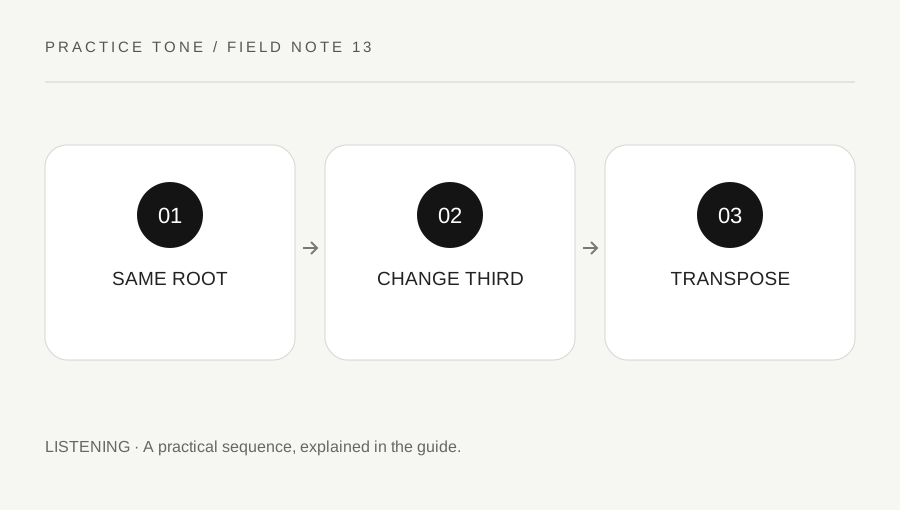
Original explanatory diagram. Numerical examples in this guide illustrate the reasoning; they are not a claim of hands-on testing.
Build the two targets explicitly
From C, a minor third reaches E-flat and a major third reaches E. The minor third spans three half steps, the major four. Name both before listening so the task has a clear target rather than a vague impression of brightness.
Play the root, then the upper note, leaving enough time to hear the distance. Keep register, rhythm and volume alike across the two pairs. If every variable changes, it becomes harder to know whether you are hearing interval size or simply a different sound quality.
The explorer can display and play C-minor and C-major triads. For a direct two-note third exercise, use the named root and third on your instrument. Its triad playback includes a fifth as well, so distinguish the chord-quality comparison from the isolated two-note interval task.
Use the chord comparison as supporting practice
Listen to C–E-flat–G and C–E–G. The root and fifth stay the same, and the third changes by one half step. Say which note moved rather than assigning an emotional adjective as the only explanation. A major chord can sound different in another rhythm or register without changing its interval construction.
Play the notes separately before sounding them together. If the third is hard to hear within the chord, return to root followed by third. That reduces the listening task instead of asking louder volume to solve a distinction that needs attention.
Use a comfortable moderate level and take a brief rest between sets. A few clear comparisons are more useful than a long sequence in which fatigue makes every answer a guess. The aim is a repeatable hearing question, not a score that claims to measure overall musical ability.
Transpose while keeping the task stable
From D, compare F for the minor third and F-sharp for the major third. From A, compare C and C-sharp. Keep the same rhythm and approximate register. The note names change, while the three-versus-four-half-step relationship remains.
Ask a practice partner to choose between the two targets if available, or alternate deliberate examples and verify them on the instrument. The site does not generate a hidden-answer listening quiz or grade your response. Do not mistake a displayed triad label for an ear-training test in which the answer was concealed.
If a new root causes confusion, write the two target notes before listening again. This distinguishes a note-construction problem from a hearing comparison. Both are worth practicing, but they require different corrections.
Review with an original short phrase
Use C–E-flat–C–E–C with one note per beat, then D–F–D–F-sharp–D. Identify the minor third and major third before playing. Keep the return to the root clear so each upper note has an audible reference.
After several attempts, describe one uncertainty: perhaps the minor third was clear from C but harder from D, or the simultaneous chord was easier than the separate pair. That note determines the next small task. Avoid concluding from six attempts that you either have or lack a musical ear.
Finish by comparing the written spelling as well as the sound. E-flat and D-sharp share an equal-tempered pitch class, but C to E-flat is a third by letter name, while C to D-sharp is a differently spelled interval. This beginner exercise keeps conventional third spellings so the ear and notation lessons support each other.
A practical checklist
Tick items for your own use. This checklist is saved only in this browser.
Questions that come up
Can I identify thirds only by whether they sound happy or sad?
Those impressions vary with context. Use the three- versus four-half-step relationship and a clear reference as the construction method.
Does the site hide answers and score my ear?
No. It displays selected notes and plays them. Use an instrument or practice partner for a concealed-choice task if desired.
Why does spelling matter if two keys sound the same?
Letter distance contributes to interval naming. The conventional spelling helps connect the heard relationship with its musical role.
References & scope
Background references checked on 18 October 2026. The examples and practice exercises are original editorial explanations, not copied procedures or professional advice.