Guitar Note Release: Hear the Space Between Attacks
Not striking a string again does not always create silence. Practice a simple attack-and-release pattern so that ringing notes, rests and unwanted strings are deliberate parts of the sound.
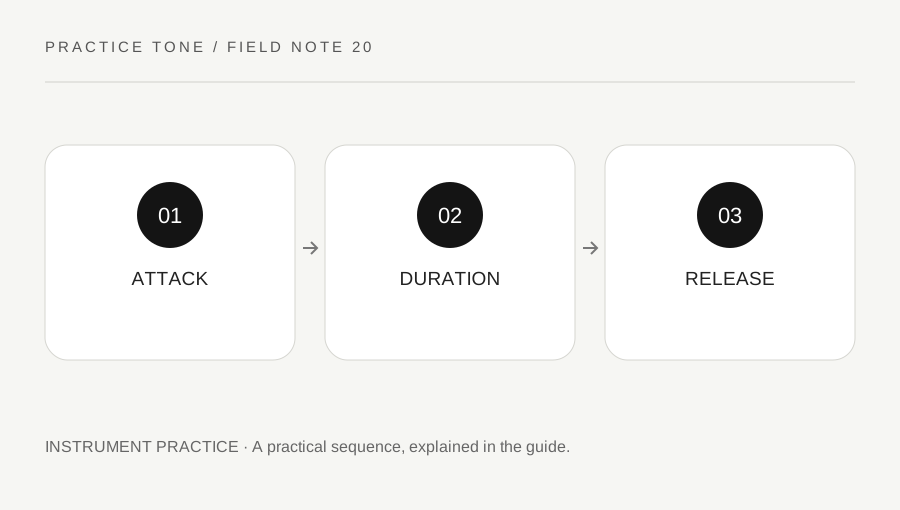
Original explanatory diagram. Numerical examples in this guide illustrate the reasoning; they are not a claim of hands-on testing.
Choose one note and one listening question
Use a comfortable note or open string and play one sound on each numbered beat in 4/4. Listen to how long it continues. The question is whether the intended duration is clear, not whether you can play many notes quickly.
A string can keep ringing after the picking hand stops moving. Therefore a written rest may require an appropriate muting or release action rather than merely omitting the next attack. The exact technique depends on the string, fingering and musical context.
Use instrument-specific instruction for hand placement and avoid forcing pressure or a strained wrist. This guide organizes the listening task, not a universal mechanical method. If a technique causes pain, stop and seek suitable guidance rather than increasing repetition to make it feel normal.
Compare a sustained and a short version
Play a note on beat one and let it continue through beat four. Then play on beat one and deliberately end the sound before beat two. Keep the next bar's first attack at the same time in both versions. The release changes note duration without changing the bar length.
Say the count through the silence. A shorter note leaves more quiet time; it does not bring the next attack forward. If you rush after muting, return to one note per bar and listen for the stable click sequence.
Choose a comfortable moderate volume so that both the ringing sound and the silence are audible. Louder playing can make unwanted strings clearer, but it can also hide a tense movement. The aim is control of duration and unwanted sound, not maximum force or an artificially silent instrument.
Check unwanted strings separately
When playing one intended string, notice whether another rings sympathetically or is touched accidentally. Record which sound you intended and which extra sound appeared. Do not treat every resonance as the same problem: an accidental picked string, a sympathetic ring and finger movement noise can require different responses.
Reduce the task to the point where you can hear the cause. Try a single attack, pause and inspect the result. Appropriate fretting-hand or picking-hand muting can help, but use a comfortable technique suited to the instrument and exercise.
Avoid covering uncertainty with a faster strum. A chord can sound acceptable as a loud block while still containing an unintended note. Listening to its strings individually at a slow pace can reveal the issue before you return to the rhythmic version.
Apply the release to an original rest pattern
Count “one and two and three and four and.” Play on one and two, rest on three, then play on four. Decide that the sound must end before beat three so the rest is genuinely quiet. Keep counting three and its “and” while the hands maintain the intended silence.
Repeat for two bars and check the boundary after four. If the last note should not overlap into the next bar, release it deliberately without shortening the remaining count. A clear release is part of the rhythm, not an afterthought.
Finish by describing one event: “second note continued into the rest” or “release was clean but next attack early.” These are different observations with different next steps. Using a steady pulse and a small pattern lets you separate attack timing, sounding duration and muting rather than calling every unwanted sound a general chord problem.
A quiet final check is to mute once and continue counting a full bar before the next attack. The silence tests pulse continuity without adding another fretting change.
A practical checklist
Tick items for your own use. This checklist is saved only in this browser.
Questions that come up
Does stopping the picking motion stop the sound?
Not necessarily. Strings can continue ringing. A rest may require an appropriate release or muting action.
Does the site teach one required muting hand position?
No. Technique depends on the instrument, note and context. Use suitable instrument-specific instruction and keep movement comfortable.
Should I make the next note earlier after a short note?
No. The remaining time stays in the rhythm as silence. Preserve the underlying count and intended next attack.
References & scope
Background references checked on 18 October 2026. The examples and practice exercises are original editorial explanations, not copied procedures or professional advice.