Practice a Guitar or Piano Chord Change in Small Pieces
A chord change can fail because of note knowledge, movement planning or timing. Separate those questions, then put a small transition back into a steady pulse.
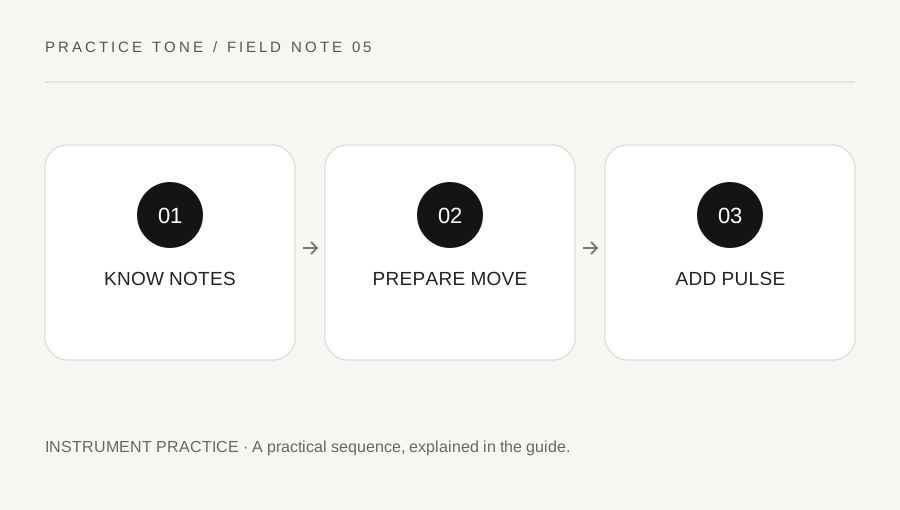
Original explanatory diagram. Numerical examples in this guide illustrate the reasoning; they are not a claim of hands-on testing.
Name the two musical targets
Choose two familiar, comfortable chords rather than a difficult sequence from a full song. C major to A minor is a useful written example: C–E–G changes to A–C–E. Two pitch classes, C and E, are shared. That relationship is useful on both piano and guitar, although the physical motions depend on the voicing and instrument.
Write the exact notes you intend to play, including which note will be lowest. A chord symbol alone can describe many valid voicings. If you do not know whether an incorrect sound came from a missing note or an incomplete movement, slow down and inspect the target without a metronome first. Practice should make the task clearer, not simply repeat the same uncertain grip faster.
Plan a small, comfortable movement
On piano, choose neighboring voicings that avoid an unnecessary leap. You might play C–E–G followed by C–E–A, retaining C and E and moving G to A. The second voicing is A minor in first inversion. This is one illustrative option, not a prescribed fingering for every hand.
On guitar, inspect the particular chord shapes you use and identify any finger that can remain in place or move a short distance. Do not assume that the piano's common notes map to stationary fingers in every guitar grip. Use a relaxed posture and a motion appropriate to your instrument. Stop if a stretch or repeated movement causes pain; speed does not justify forcing an uncomfortable position.
Practice arrival before repeated switching
Play the first chord, release unnecessary pressure and prepare the second chord slowly. Check the destination notes before sounding them. Repeat the movement only a few times, noticing which part hesitates. If one finger consistently arrives late, isolate its route rather than adding a louder strum or harder key attack to conceal the incomplete change.
Then reverse the direction. A movement that feels organized from C to A minor may feel different returning to C. Treat the two directions as related but separate tasks. Keep the sound quiet enough to hear unwanted strings or missing tones. A clean, deliberate arrival gives better information than a long loop in which every repetition contains the same unexamined noise.
Add a pulse with room to prepare
Set 4/4 at a manageable tempo. Play C major on beat one, then use the remaining beats to prepare A minor for the next bar's beat one. Count the entire bar even while the instrument is quiet. Start with one change per bar before trying changes every two beats or every beat.
If the next chord arrives late, decide whether the movement needs more preparation time or the count was lost. The solutions differ. You can keep the same tempo and increase the number of preparation beats, or slow the pulse while keeping the same pattern. Change one variable at a time so that you know which adjustment improved the transition.
Bring back a simple rhythm
Once the arrivals are dependable, add an original rhythm such as one sound on beats one and three. Continue changing chords only at the bar line. Then try four even beat sounds per bar. The timing of the change should remain the main observation, rather than the complexity of the strumming or accompaniment pattern.
Finish by writing one specific note: “destination prepared by beat four” or “return movement loses the common tone.” Those observations guide the next short session. A successful practice attempt may use fewer chord changes at a slower pace while producing clearer notes and steadier entries. Keep the task small enough that you can hear and explain the difference between a musical target, a hand movement and a rhythm problem.
A practical checklist
Tick items for your own use. This checklist is saved only in this browser.
Questions that come up
Should I keep every common finger in place?
Only when it suits the chosen voicings and comfortable technique. A common pitch does not always require or allow a stationary finger.
Is a muted note always a timing error?
No. It may come from pressure, contact or a misplaced finger. Inspect the chord slowly before changing the tempo.
How long should I repeat one change?
Use short attentive sets with breaks. Stop repeating when you can no longer notice the cause of an error or when tension builds.
References & scope
Background references checked on 18 October 2026. The examples and practice exercises are original editorial explanations, not copied procedures or professional advice.