Straight and Swing Eighths: Compare the Pair Without Forcing a Formula
Straight eighth notes divide a beat evenly. Swing changes the relationship within the pair, but its exact timing varies with style and tempo. Begin with a clear comparison rather than one universal ratio.
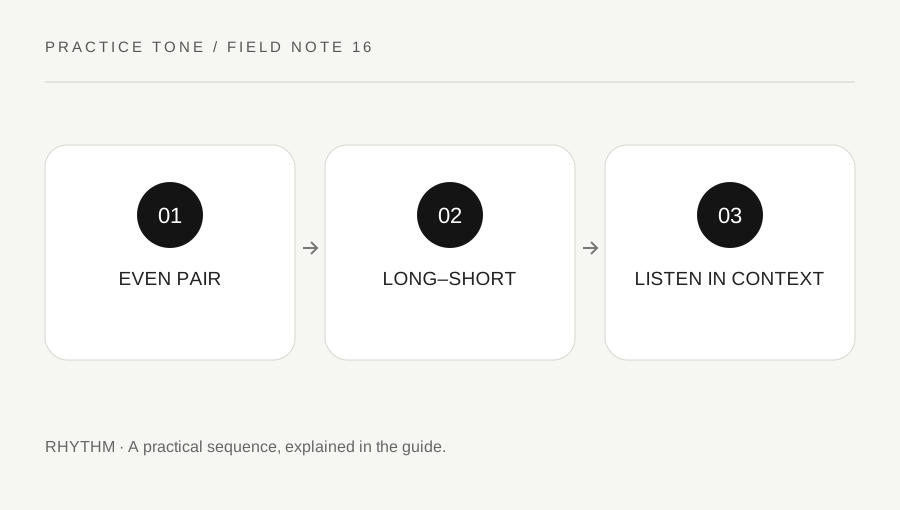
Original explanatory diagram. Numerical examples in this guide illustrate the reasoning; they are not a claim of hands-on testing.
Make the straight version clear
Set a quarter-note pulse and count “one and two and three and four and.” Place every “and” halfway between the neighboring numbered beats. Clap or play a single pitch on all eight positions. The two notes within each beat have equal onset spacing.
Keep the tempo stable across several bars. If the second note already drifts later, you do not yet have a dependable straight reference for the comparison. Slow the task or use spoken subdivisions before adding an instrument.
This guide discusses the timing of paired attacks rather than every aspect of articulation or accent. A straight pattern can still have dynamics and phrasing. Equal subdivision does not require every note to sound equally loud or equally detached, so state which feature you are practicing.
Use a triplet-based model as an introduction
One common introductory swing model divides the beat into three equal parts and places attacks on the first and third parts. Count “one-trip-let,” sounding one and let. That creates a longer gap followed by a shorter gap within the pair.
Treat this as a learning approximation. Swing timing is not always a fixed two-to-one ratio, and performers vary the relationship with tempo, style and phrasing. A mathematical model can help you hear a contrast but should not be imposed as the only authentic timing for all music.
Keep the main beat constant while trying the long–short pair. Do not lengthen the whole beat to make room for the delayed second attack. The pair still occupies one beat, and the next numbered beat remains aligned with the pulse.
Compare the two versions with one variable
Use one comfortable note and play two bars straight, then two bars with the introductory long–short model. Keep tempo, register and volume similar. Listen for the changed placement of the second attack rather than judging the result only by a style label.
The site's metronome produces equal clicks and does not include a swing-subdivision switch. Use its quarter-note pulse as the reference while you supply the subdivisions. Do not assume that changing the meter to 6/8 automatically creates swing in a 4/4 exercise; meter grouping and performed swing are related but distinct topics.
If you lose the main beat, return to tapping only the numbered clicks. Rebuild the pair after the beat is clear. A simple timing comparison should remain audible rather than becoming a coordination contest.
Listen to style context without copying a protected arrangement
Use a legally available recording or an instructor's demonstration to hear how a particular style treats paired notes. Focus on a short timing question, such as whether the second attack changes placement at a faster tempo. This site supplies original exercises rather than transcribed song charts.
For practice, play the original pitch sequence C–D–E–G over two beats as four eighth-note attacks, then repeat with the introductory long–short grouping. Keep the note order constant so that timing is the main change. Reverse the comparison after a short rest.
Finish by writing what your model captured and what remains contextual. “The second attack was delayed within each beat” is a useful observation. “Swing always equals one exact fraction” overstates the lesson. A clear straight reference and an openness to style-specific listening provide a stronger foundation for developing the feel.
When reviewing a recording, compare attack placement separately from loudness. A stronger second note can seem more prominent without arriving later, so an accent difference alone does not demonstrate the intended long–short timing.
A practical checklist
Tick items for your own use. This checklist is saved only in this browser.
Questions that come up
Is swing always exactly two-to-one?
No. That is a useful introductory model, but performed timing varies with style, tempo and phrasing.
Does the tool generate swing clicks?
No. Its clicks are evenly spaced. Use the pulse as a reference while practicing your own straight or long–short subdivisions.
Does selecting 6/8 turn a 4/4 rhythm into swing?
No. Meter grouping is not a substitute for a style-specific swing interpretation. Keep the intended meter and beat unit clear.
References & scope
Background references checked on 18 October 2026. The examples and practice exercises are original editorial explanations, not copied procedures or professional advice.