Piano Coordination: Combine Two Simple Parts Gradually
Hands-together practice adds a coordination task beyond knowing either part alone. Use small original patterns and a slow shared pulse so that each hand’s role remains understandable.
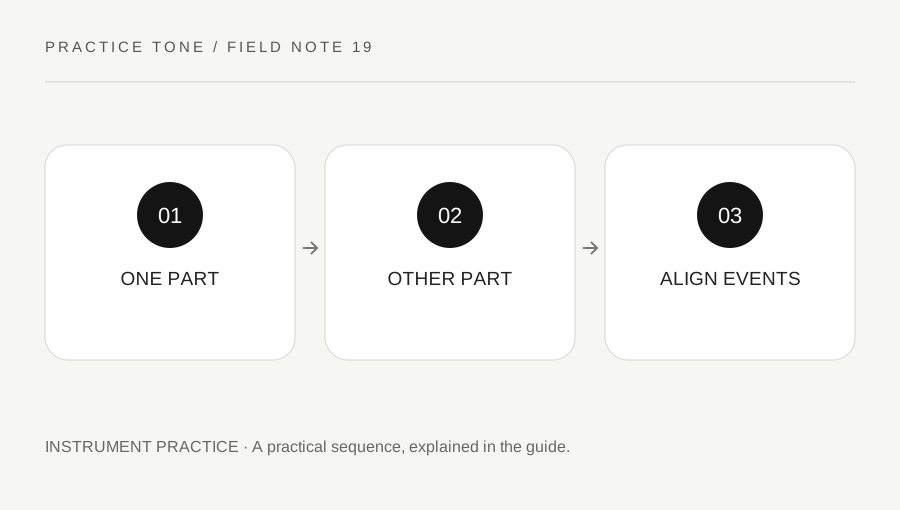
Original explanatory diagram. Numerical examples in this guide illustrate the reasoning; they are not a claim of hands-on testing.
Choose patterns that are easy separately
Use a comfortable right-hand pattern such as C–D–E–D, one note per beat, while the left hand plays a single lower C at the start of each four-beat bar. These are original exercises, not a song transcription. Keep both parts physically easy so coordination is the main question.
Practice each part alone while counting the same four beats. The left hand's single note does not remove beats two, three and four; those are still counted. The right hand should not accelerate simply because its pattern contains more movement.
Use suitable fingering and register for your hand and instrument. This article does not prescribe a universal finger sequence. Stop if the chosen reach or posture causes discomfort, and simplify the physical task before increasing the rhythmic complexity.
Map the attacks before playing together
Write four beat positions. Mark a right-hand note on each and a left-hand note only on one. The simultaneous event occurs at the first beat. Say “together, right, right, right” as a movement map, then return to ordinary counting so that the musical pulse remains clear.
Try the motions quietly without pressing keys if that helps. The purpose is understanding the alignment, not forcing independence through speed. If the left hand copies every right-hand attack, slow down and isolate one bar until the intended event pattern is clear.
Do not confuse a sustained left-hand note with repeated left-hand attacks. Decide how long the note should sound and release it deliberately. That duration question is separate from when the next attack occurs.
Add one additional left-hand event
After the first pattern is comfortable, let the left hand play on beats one and three while the right continues every beat. The movement map becomes together, right, together, right. Keep the same tempo and note pattern so only one coordination variable changes.
Listen for whether beat three causes a hesitation or whether the right hand's third note becomes louder unintentionally. A quiet accent change may reveal where extra attention is being spent. Do not solve that by forcing both hands to play louder throughout.
If the combined task breaks down, return briefly to separate parts at the intended count, then combine just beats two through four. Practicing the difficult boundary can be more useful than restarting from the beginning ten times while repeating the same stumble.
Review coordination without equating it with ability
Try four bars, stop and name one observation. Perhaps the hands align on one but the left hand arrives early on three. That gives a specific practice target. A broad judgment such as “I cannot use both hands” does not describe what actually happened.
For a second original variation, keep the left-hand beats one and three but change the right-hand notes to E–D–C–D. Preserve the rhythm so you can see whether a new pitch order disrupts the learned alignment. Increase only one source of complexity at a time.
Finish at a tempo where the event map is still understandable. Progress can mean smoother coordination and less tension without faster playing. When moving to more complex material, keep the same method: know each part, map simultaneous events, combine a short segment and review the exact point where the alignment becomes uncertain.
As a boundary check, count four and then one across two bars without pausing. Both hands should understand where the new bar starts, even if only one hand has a new attack there.
A practical checklist
Tick items for your own use. This checklist is saved only in this browser.
Questions that come up
Should I always practice hands separately first?
It can help when either part is uncertain, but the useful method depends on the task. This exercise uses separate practice to make the coordination targets clear.
Does a harder combined attempt mean the separate work failed?
No. Combining adds another task. Reduce the segment and map the alignment instead of assuming that either hand has forgotten its notes.
Can the tool assess my hand timing?
No. It supplies a pulse and selected reference pitches. It does not listen, watch or grade instrument technique.
References & scope
Background references checked on 18 October 2026. The examples and practice exercises are original editorial explanations, not copied procedures or professional advice.